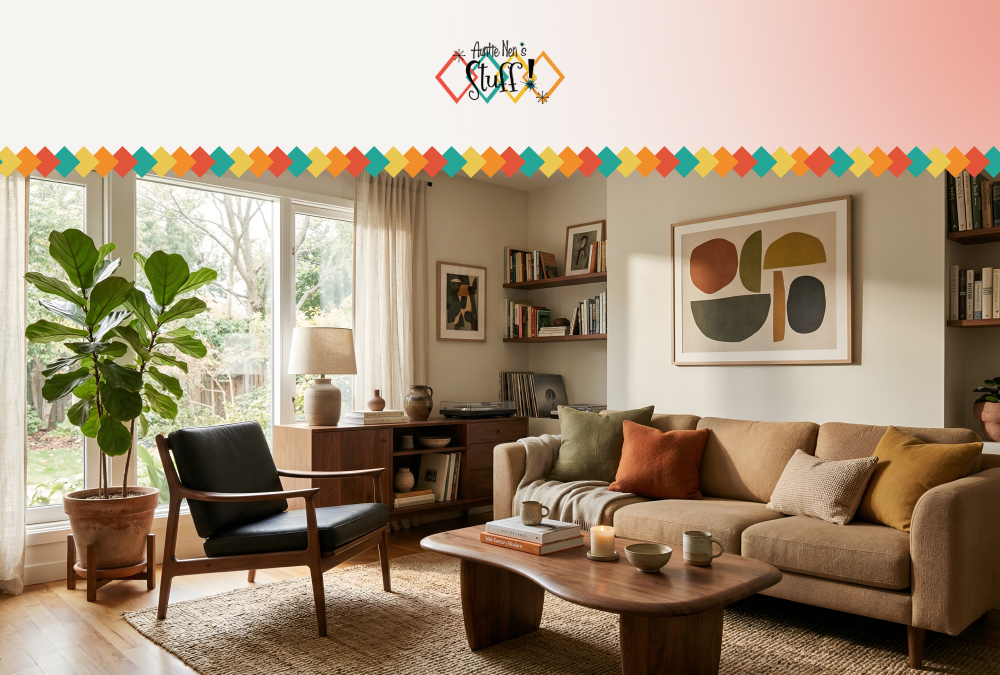
Mid-century modern architecture is one of the most recognizable design styles of the 20th century. Emerging between the 1940s and 1960s, this architectural movement emphasizes clean lines, open floor plans, large windows, and a strong connection to nature. Mid-century modern homes were designed to blend indoor and outdoor living while prioritizing functionality, simplicity, and natural light. Today, the style remains popular for its timeless aesthetics and practical design principles that continue to influence modern architecture and home design.
Clean Lines and Minimal Ornamentation
If you strip away all the extras, what is left? That is the starting point for mid-century modern. These buildings do not have a lot of fancy trim or carved details. They do not try to look like old European castles.
Instead, they focus on the shape of the building itself. The lines are clean and simple. The goal is to let the form of the house speak for itself. You might see a long, low rectangle that stretches across the land. Or you might see a simple geometric shape like a square or an L-shape.

This idea came from the architects of the Bauhaus and International movements. They believed that things should look like what they are. A house should look like a house, not a palace. There is an honesty to the design. You can see it in the way the walls meet the roof and how the windows fit into the structure.
The Use of Modern Materials
The mid-century period was a time of new technology. After World War II, factories had new ways of working with materials. Architects took advantage of this.
They used materials in new ways. Steel frames allowed for bigger windows and open spaces. Concrete could be shaped into curves and angles. Plywood became a material for walls and furniture. And glass. Lots of glass.
But they did not stop with the new stuff. They also loved natural materials. You will often see warm wood paneling on the ceiling or walls. Stone and brick were also common. The trick was to mix them. A house might have a wall of glass next to a solid brick wall. The contrast makes both materials look better.
This mix of old and new is part of what gives the style its warmth. It is not cold like some modern buildings can feel. The wood adds warmth, and the glass and steel add a crisp, clean edge.
Open Floor Plans
Walk into a mid-century modern home, and you will feel it right away. The space flows.
Before this era, houses were often a series of boxes connected by hallways. You had a living room, a dining room, and a kitchen, all separated by walls. Mid-century architects changed that. They knocked down the walls.

They created open floor plans where the living room flows into the dining room. The kitchen might open up to the family room. This made the houses feel bigger. It also changed how families lived. Parents could be in the kitchen and still see the kids playing in the living room. It felt more connected.
This openness was made possible by new building techniques. They used post and beam construction. Think of it like a table. The roof sits on beams, which are held up by posts. The walls are just fillers. They do not hold up the roof. So, if a wall is not holding anything up, you can make it out of glass. Or you can remove it entirely. That is how you get those big, open spaces.
Large Windows and a Connection to Nature
This might be the most famous feature of mid-century modern design. The walls of glass.
Architects wanted to bring the outdoors in. They wanted you to feel like you were living in the landscape, not just on top of it. So they used floor-to-ceiling windows. Sometimes, an entire wall would be made of glass.
This does a few things. First, it lets in tons of natural light. The houses feel bright and airy. Second, it makes the inside feel bigger because you can see the yard from every angle. Third, it connects you to nature. You can watch the sunset from your sofa. You can see the rain on the leaves without getting wet.

This idea went beyond just windows. Many homes had sliding glass doors that opened onto a patio or deck. The line between inside and outside disappeared. The patio became an outdoor room. This was perfect for the post-war lifestyle of barbecues and family gatherings.
Low-Slung Profiles and Flat or Low-Pitched Roofs
Look at the shape of these houses from the street. They are usually wide and low. They hug the ground.
This horizontal line is a key part of the look. It makes the house feel grounded and stable. It also fits the landscape. Instead of fighting the land, the house sits on it quietly.
The roofs match this low profile. Many mid-century homes have flat roofs. Others have a low, shallow gable. The rooflines often extend far out from the house. These are called wide eaves. They provide shade from the high summer sun and shelter from the rain.
Inside, the ceilings often follow the roofline. You might have a high, sloping ceiling in the living room. The beams are often left exposed. This adds visual interest and a bit of rustic warmth to the modern design.
Integration with the Site
Mid-century modern architects did not believe in a one-size-fits-all house. They believed a house should belong to its specific piece of land.
This is different from tract homes, where every house is the same, no matter the lot. In this style, the house is designed for the site. If the lot has big rocks, the house might be built around them. If there is a slope, the house steps down with it.

This idea came from architects like Frank Lloyd Wright. He called it organic architecture. The house should look like it grew there, not like it was dropped from a truck. The materials might even match the local stone or wood. The goal is harmony between the building and the land.
In Palm Springs, you see houses designed for the desert. In the woods, you see houses made of wood and stone. The style adapts to its place.
Function Over Form
At its heart, mid-century modern is about how the house works, not just how it looks. The design starts with the needs of the people living there.
Architects like Charles and Ray Eames believed in solving problems. They asked questions like, “How does a family live?” How do they move through the space? What do they need from their home?
The answers to those questions shaped the design. A house should be practical. It should make life easier. This does not mean it has to be ugly. It means the beauty comes from the solution. A well-designed house that works well is beautiful because it works well.
This is why the style still feels fresh today. Our needs are different now than in 1955, but the idea of designing for how we actually live is timeless. If you are looking to bring this functional beauty into your own space with the right accent pieces or a warm, wood-toned accessory, keep an eye on what we are doing over at Auntie Nen’s Stuff. We love pieces that work as hard as they look.
A Global Movement with Local Flavors
Mid-century modern was not just an American thing. It happened all over the world. And different places put their own spin on it.
In Scandinavia, the style was softer. They used more natural wood and organic shapes. Their designs were cozy and warm. They focused on craftsmanship and simple elegance.
In Brazil, the style was more sensual and curved. Architects like Oscar Niemeyer used concrete to create flowing, sculptural forms. The entire capital city of Brasília was built in this style. It is a whole city of mid-century modern architecture.
In the United States, you had regional variations. The Case Study Houses in California were experiments in modern living. In Florida, the Sarasota School of Architecture adapted the style to the humid, coastal environment. So while the core ideas are the same, the look changes depending on where you are.
| Feature |
Description |
| Clean Lines & Minimalism |
Designs emphasize simple geometry, straight lines, and minimal decorative elements. (Ok Decoracion) |
| Open Floor Plans |
Interior spaces flow together with fewer walls, creating spacious and flexible layouts. |
| Large Windows & Glass Walls |
Floor-to-ceiling windows bring in natural light and connect indoor spaces with the outdoors. |
| Integration with Nature |
Architecture often includes courtyards, patios, and views of surrounding landscapes. |
| Use of Natural Materials |
Wood, stone, brick, and glass are commonly used to add warmth and texture. |
| Flat or Low-Pitched Roofs |
Many homes feature flat roofs or gentle slopes that emphasize horizontal lines. |
| Functional Design Philosophy |
The style follows the principle of “form follows function,” focusing on practicality and efficiency. |
| Indoor-Outdoor Living |
Sliding doors, patios, and open spaces blur the boundary between inside and outside environments. |
Conclusion
Mid-century modern architecture is more than a trend. It is a way of thinking about space, materials, and how we live.
The characteristics are clear. Clean lines. A mix of warm wood and cool glass. Open rooms that flow together. Big windows that let the outside in. Low roofs that hug the land. And above all, a focus on making the house work for the people inside.
These ideas were bold in the 1950s. They still feel right today. That is why we keep coming back to them. It is a style that respects the past while looking straight into the future.
FAQs
Q1) What are the main characteristics of mid-century modern architecture?
Mid-century modern architecture is characterized by clean lines, open floor plans, large windows, minimal ornamentation, and strong connections to nature. The style emphasizes functionality, natural light, and indoor-outdoor living, making it one of the most influential architectural movements of the 20th century.
Q2) Why are large windows common in mid-century modern homes?
Large windows and glass walls are common because they maximize natural light and create a connection between indoor and outdoor spaces. This design approach reflects the mid-century philosophy of blending architecture with the surrounding landscape.
Q3) What materials are typically used in mid-century modern architecture?
Mid-century modern homes commonly use natural materials such as wood, stone, and brick, along with modern materials like steel, glass, and concrete. These materials highlight simplicity while allowing innovative structural designs.
Q4) Why do mid-century modern homes have open floor plans?
Open floor plans were introduced to create flexible living spaces and improve social interaction within the home. This layout removes unnecessary walls, allowing living, dining, and kitchen areas to flow together seamlessly.
Q5) What makes mid-century modern architecture still popular today?
Mid-century modern architecture remains popular because of its timeless simplicity, functional design, natural light, and connection with nature. These qualities make the style adaptable to modern lifestyles and contemporary renovations.