Mid-century modern design is having a moment. Actually, it’s been having a moment for the last two decades. This style, born roughly between 1945 and 1970, refuses to fade away. And for good reason.
It’s the style that gave us the Eames Lounge Chair, the clean lines of Palm Springs architecture, and the idea that a coffee table can also look like a piece of sculpture. It blends function with cool. It doesn’t try too hard. That’s why it works.
If you’re looking to bring some of that timeless appeal into your space, you don’t need a time machine. You just need a plan. Here are practical ways to bring mid-century modern design into your home.
What Is Mid-Century Modern, Really?
Before we start moving furniture around, it helps to know what we are actually talking about. Mid-century modern isn’t just “old stuff from the 50s.”
It’s a philosophy. It follows the Bauhaus idea that form should follow function. That means a chair should be comfortable and useful first. But it should also look good doing it.
Key traits of this style include clean lines, minimal ornamentation, and a mix of natural and man-made materials. You’ll see warm woods like teak and walnut paired with metals, glass, or molded plastic. The shapes are often simple but bold. And there is always an effort to blur the line between the indoors and outdoors.
Start with the Furniture: Look for the Legs
You can change the whole feel of a room with one or two good pieces. You don’t need to renovate your house to get this look.
The easiest place to start is with furniture. Mid-century modern furniture has a specific look. Look for pieces with tapered legs. That’s the signature move. It makes the piece look light and lifted, even if it’s a big dresser or a heavy sofa.

If you are shopping, keep an eye out for these materials:
- Teak or walnut wood: These were the favorites. They have a rich warmth that’s key to the style.
- Sleek silhouettes: Think sofas that are low to the ground with clean lines.
- Geometric shapes: A coffee table doesn’t have to be a rectangle. Look for circles, ovals, or abstract forms.
You can find real vintage pieces, but modern reproductions work just as well. The goal is the shape and the honesty of the design.
The Color Palette: Earthy and Accented
If you look at a mid-century modern home, you will notice the colors feel grounded. They don’t scream at you. But they aren’t boring, either.
The base is usually neutral. Think beige, warm grey, off-white, and tan. These colors create a calm backdrop. They let the furniture do the talking.
Then come the accents. Mid-century style loves pops of saturated color. You can add these in small doses.
- Mustard yellow
- Burnt orange
- Olive and forest green
- Deep blue or teal
A great way to test this is with throw pillows, a rug, or one accent chair. It brings energy to the room without making it feel like a carnival.
Mix Old and New
Here is a secret that designers use all the time. You don’t have to be pure about this style. In fact, a room that is 100% mid-century can feel like a museum set.
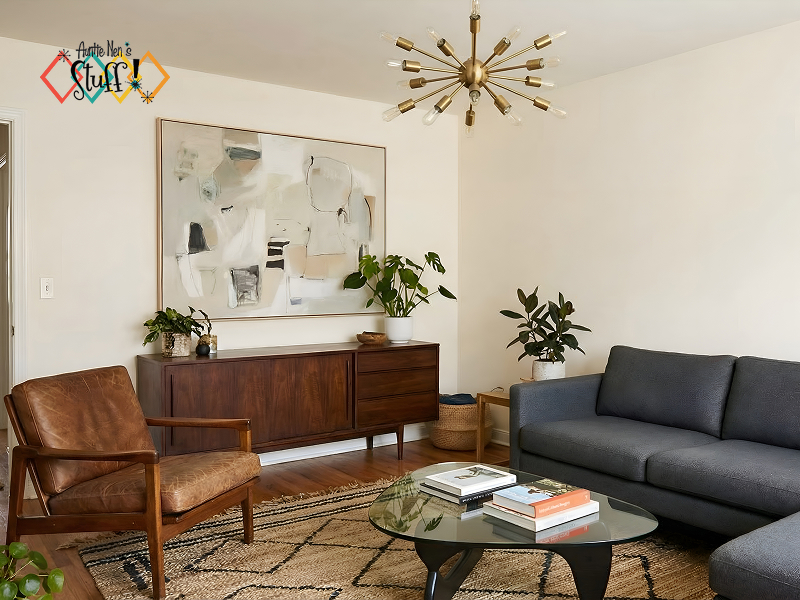
It’s better to mix it up. Blend your grandfather’s old armchair with a sleek modern sofa. Put a vintage Sputnik chandelier in a room that has contemporary art on the walls.
This mix creates contrast. It makes the vintage pieces feel fresh and the modern pieces feel warm. If you try to force it, it feels stiff. When you mix, it feels like home.
You can anchor the room with one big mid-century piece. Maybe it’s a walnut sideboard or a classic sofa. Then, build around it with modern accessories and different textures.
Bring the Outdoors In
This is a core part of the mid-century philosophy. Architects back then wanted houses to feel connected to nature. They used big glass walls and open floor plans to make that happen.
You might not be able to knock down a wall. But you can still steal the idea.
Use large windows to let in natural light. Keep window treatments light. Sheer curtains or simple blinds work best. The view outside should feel like part of the room.
Also, bring plants inside. A fiddle-leaf fig or a rubber plant in a simple pot adds life. It mimics the organic shapes found in mid-century design and makes the space feel fresh.
Material Mix: Wood, Metal, and Glass
One thing that makes this style stand out is how it mixes materials. It doesn’t stick to just one thing.
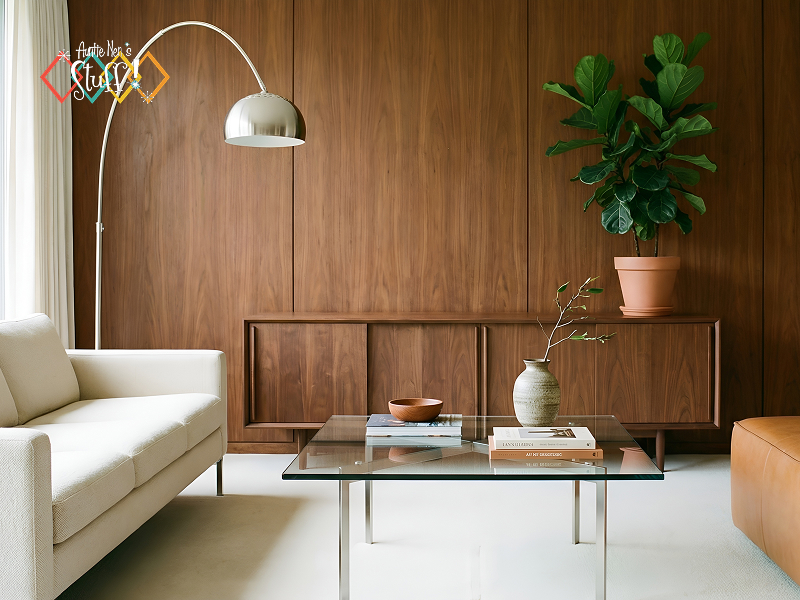
A classic mid-century room will have warm wood paneling on the walls. But right next to it might be a chrome floor lamp or a glass coffee table. This contrast is intentional. The metal and glass stop the wood from feeling too heavy or dark. The wood stops the metal from feeling too cold.
You can try this in small ways. If you have a wood-heavy room, add a metal arc floor lamp. If your space feels too modern and sterile, bring in a bowl turned from solid teak or a leather ottoman.
Layouts That Flow
Forget pushing all your furniture against the walls. Mid-century spaces are about flow.
These homes often had open floor plans. The living room flowed into the dining room. The kitchen opened up to the yard. You want your furniture arrangement to support that kind of movement.
Keep traffic patterns in mind. Don’t block the path from the door to the sofa. Let the furniture float in the room. A sofa can sit in the middle of the space, with a console table behind it. This defines the area without closing it off.
Lighting also guides the flow. Use a mix of sources. A Sputnik chandelier adds drama above. An arc lamp can curve over the seating area. Table lamps with sculptural shapes add warmth at eye level.
Real-World Inspiration: A Modern Indian Take
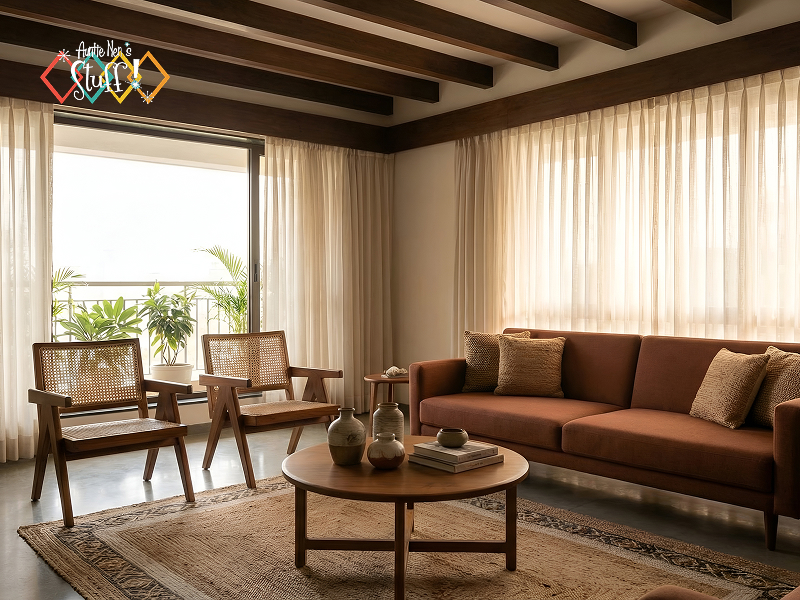
It is fascinating to see how this style translates across the world. For instance, a recent project in Mumbai took mid-century modern ideas and blended them with Indian craftsmanship. The result was a warm, minimalist home.
They used exposed wooden beams and cane-backed chairs. These are traditional materials, but the lines were clean and simple. They added a rust-colored sofa for that pop of mid-century color. And they used sheer curtains to let in soft, natural light.
This proves the style is flexible. You can adapt it to your local materials and your personal taste. It’s not about copying a picture from a magazine. It’s about taking the principles—clean lines, honest materials, functional beauty—and making them your own.
Common Mistakes to Avoid
Let’s keep it real. It is easy to go wrong if you aren’t careful.
First, don’t over-clutter. Mid-century design values clean space. If you fill every surface with knick-knacks, you lose the power of the furniture.
Second, don’t ignore scale. These pieces often have low profiles. If you have high ceilings, you might need to adjust. Use tall plants or vertical art to draw the eye up.
Third, be careful with color. Too many bright accents will clash. Stick to your neutral base and bring in color thoughtfully.
Where to Find Pieces
You have options. High-end retailers still make licensed reproductions of Eames and Saarinen classics. But you can also find deals.
Check thrift stores and estate sales. Look for solid wood dressers with those tapered legs. Even if the fabric is ugly, the bones might be good. You can reupholster.
And don’t overlook modern brands. Many companies today make furniture inspired by the era. Look for clean lines and warm wood tones. And if you ever need help finding that perfect accent piece to tie a room together, don’t forget to check out what we have cooking over at Auntie Nen’s Stuff. We love a good retro-modern mix.
| Design Element |
Key Characteristics |
How to Apply It |
| Core Philosophy |
Form follows function; clean lines; minimal ornamentation; blends indoor/outdoor living. |
Focus on usefulness and beauty in every piece. Let the room’s layout support natural flow and light. |
| Furniture |
Tapered “hairpin” legs; low-profile sofas; geometric shapes (circles, ovals). |
Look for pieces in teak or walnut. A single iconic item, like a sculptural sideboard, can anchor a room. |
| Color Palette |
Neutral base (beige, warm grey, tan) with pops of saturated color. |
Use mustard yellow, burnt orange, olive green, or teal in accents like pillows, a rug, or one chair. |
| Materials |
Mix of natural and man-made: warm wood, metal (chrome/brass), glass, molded plastic, leather. |
Pair a wood-paneled wall with a chrome lamp. Add a glass coffee table to balance heavy wood furniture. |
| Lighting |
Sculptural and functional; often a focal point. |
Use a Sputnik chandelier for drama, an arc floor lamp to define a seating area, or sculptural table lamps. |
| Connection to Nature |
Large windows, minimal window treatments, incorporating plants. |
Use sheer curtains, let in natural light, and add plants like fiddle-leaf figs to bring organic shapes indoors. |
| Layout & Flow |
Open, uncluttered spaces. Furniture “floats” away from walls to define areas without blocking traffic. |
Avoid pushing all furniture against walls. Let a sofa sit in the middle of the room with a console table behind it. |
Conclusion
Mid-century modern design has stuck around because it works. It’s comfortable without being sloppy. It’s stylish without being showy. It respects the past but fits perfectly in how we live today.
Start small. Add a chair with tapered legs. Paint a wall a warm neutral. Swap out a clunky lamp for something with a clean arc. You don’t have to do it all at once.
The best homes are the ones that feel collected over time. And if you mix in a little mid-century magic, your home will feel grounded, open, and ready for whatever comes next.
FAQs
Q1) What defines Mid-Century Modern design?
Mid-Century Modern (MCM) is a design philosophy from roughly 1945-1970 where form follows function. It is characterized by clean lines, minimal ornamentation, and a thoughtful mix of materials like warm woods (teak, walnut), metal, and glass. The goal is to create pieces and spaces that are both useful and beautiful, often blurring the line between indoors and outdoors.
Q20 How can I mix Mid-Century Modern pieces with my existing decor?
The key is to avoid a “museum set” look by blending old and new. Anchor your room with one or two key MCM pieces—like a classic sofa or a walnut sideboard. Then, build around them with modern accessories, contemporary art, and different textures. This contrast makes the vintage pieces feel fresh and the modern pieces feel warm and collected.
Q3) What are the most common colors used in Mid-Century Modern interiors?
The palette typically starts with a neutral base of beige, warm grey, tan, or off-white. This calm backdrop allows the iconic pops of saturated accent color to shine. Common accent colors include mustard yellow, burnt orange, olive green, forest green, and deep teal or blue.
Q4) Where is the best place to find authentic Mid-Century Modern furniture?
You have several great options. For investment pieces, high-end retailers sell licensed reproductions of classics. For authentic vintage finds, explore thrift stores, estate sales, and online marketplaces. Look for solid wood dressers with tapered legs—even if the upholstery is worn, the “bones” are likely good and can be reupholstered. Many modern brands also create excellent MCM-inspired furniture with clean lines and warm wood tones.
Q5) What are common mistakes to avoid when decorating in this style?
Three common pitfalls are easy to avoid. First, don’t over-clutter; MCM design values clean, open spaces to let the furniture’s form shine. Second, pay attention to scale; MCM pieces often have low profiles, so use tall plants or vertical art to balance rooms with high ceilings. Finally, use accent colors thoughtfully; too many bright pops can clash, so stick to a neutral base and introduce color in a measured way.