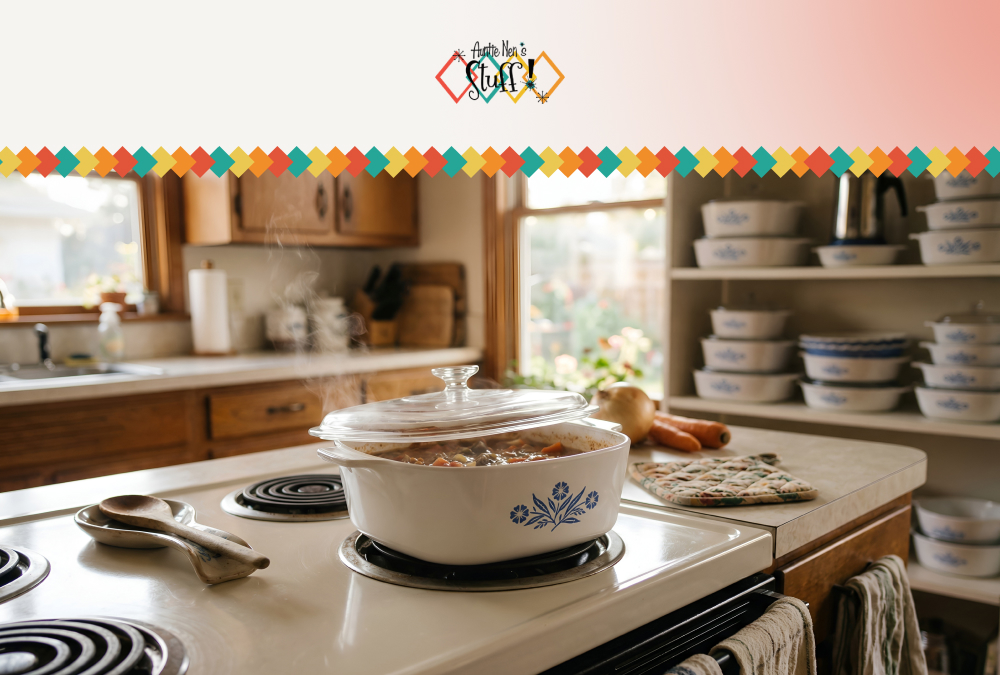
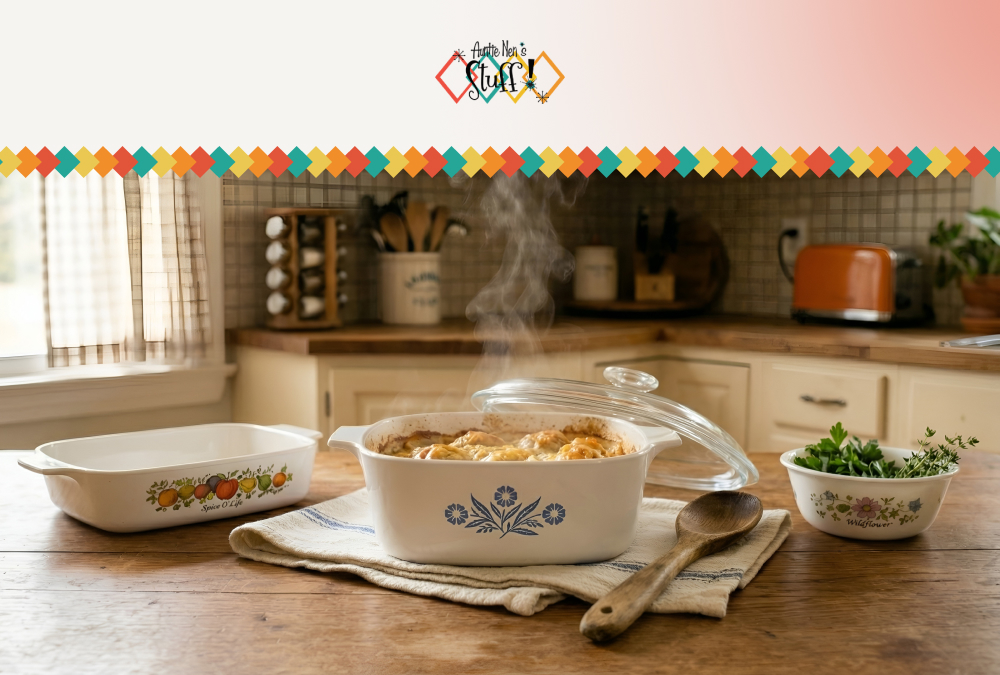
Corning Ware hit American kitchens in 1958. It was a game-changer. The cookware could go from stove to oven to table without breaking. It was made from a glass-ceramic material called “Pyroceram,” originally developed for missile nose cones. That’s why it could handle extreme temperature changes.
For over forty years, Corning released patterns that became household staples. Today, those patterns are collectible. Some are worth a few dollars. Others sell for hundreds.
If you have old vintage Corningware in your cabinets, you might be sitting on something valuable. This guide covers the major patterns from 1958 to 2001. You’ll learn how to identify them, which ones are rare, and what to look for at estate sales or in your own kitchen.
I’ve spent years hunting vintage cookware. Auntie Nen’s Stuff has encountered a wide range of vintage cookware, from the common “Cornflower” pieces to the elusive “Spice O’ Life” patterns that captivate collectors. Here’s what you need to know.
What Are the Most Valuable Vintage Corning Ware Patterns?
The most valuable vintage Corningware patterns are rare, short-run designs from the 1960s and 1970s. “Wildflower” (1976–1978) and “Spice O’ Life” (1972–1975) consistently sell for the highest prices, with some pieces reaching $200 or more. “Blue Heather” (1970–1974) is also highly collectible. The original “Cornflower” pattern (1958–1988) is the most common and typically holds the lowest value, though rare shapes and lids in any pattern can command premium prices. Condition matters: pieces with no chips, cracks, or utensil marks are worth significantly more.
A Brief History of Corningware
Corning Glass Works introduced Corning Ware in 1958. The material was revolutionary. You could take a dish from the freezer straight into a hot oven. It wouldn’t shatter. That was unheard of at the time.
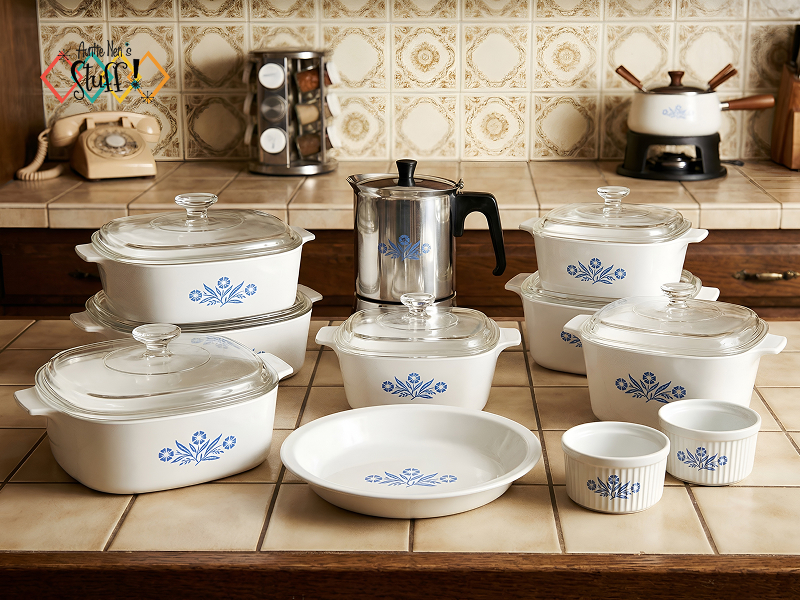
The first pattern was “Cornflower.” It featured a simple blue floral design. That pattern became the face of Corning Ware for decades. It ran from 1958 until 1988.
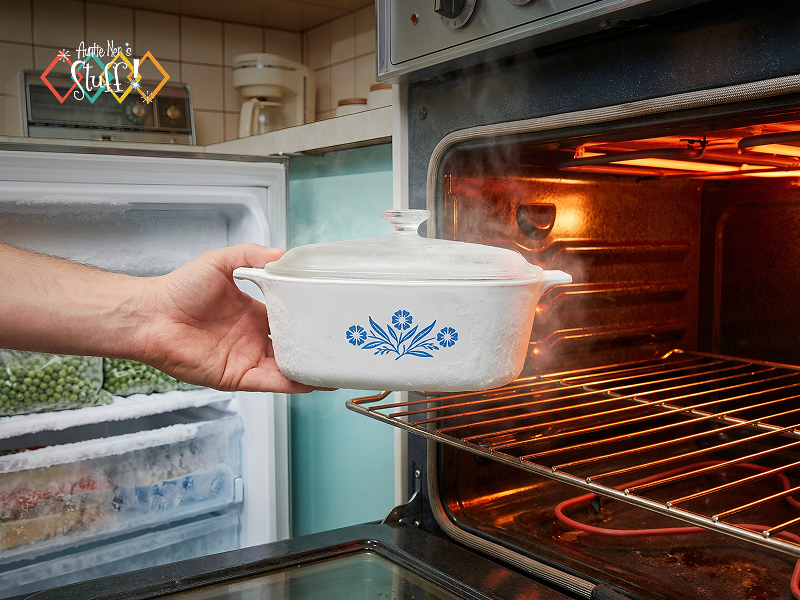
In the 1970s, Corning expanded. They introduced new patterns to match changing kitchen trends. Earth tones, florals, and geometric designs appeared. Some patterns lasted only a few years. That limited run is what makes them valuable today.
Corning Ware remained in production until 2001. After that, production moved overseas. The vintage American-made pieces are what collectors want.
How to Identify Corningware Patterns
Corning Ware patterns are marked on the bottom of each piece. You’ll usually see a stamp that says “Corning Ware” along with the pattern name or a code. But the stamps can wear off over time.
Here’s how to identify what you have:
- Look at the bottom. If the stamp is still readable, it will list the pattern name.
- Check the shape. Some patterns were only made on specific dish shapes. A casserole dish might have a pattern that never appeared on a pie plate.
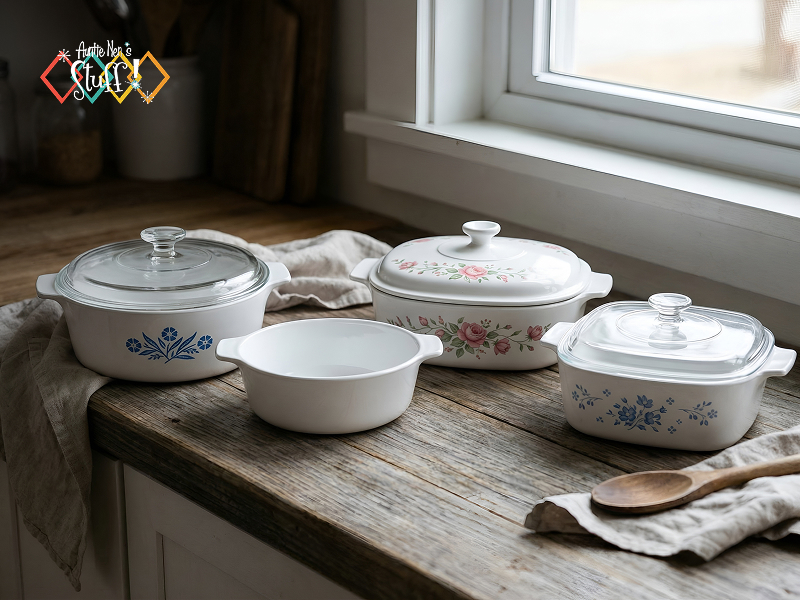
- Compare the design. Online pattern guides are your best resource. The colors, floral style, and layout are usually unique to each pattern.
I’ve seen pieces at Auntie Nen’s Stuff where the bottom stamp was completely gone. But the pattern was still clear. Once you know what to look for, you can spot a valuable piece from across the room.
Major Corning Ware Pattern Eras
1958–1970: The Early Years
The early patterns were simple. “Cornflower” dominated this period. But there were others.
“Floral” (1960s) was a gold and brown floral pattern. It’s less common than Cornflower and more collectible. “Tulip” (1960s) featured a stylized red tulip design. That one is harder to find.
These early pieces often came in smaller sizes. The packaging was different too. Early Corning Ware had a paper label instead of a stamped mark. Those paper labels rarely survive.
1970–1980: The Golden Era of Patterns
This was Corning’s most creative period. They released pattern after pattern. Some were hits. Others were discontinued quickly.
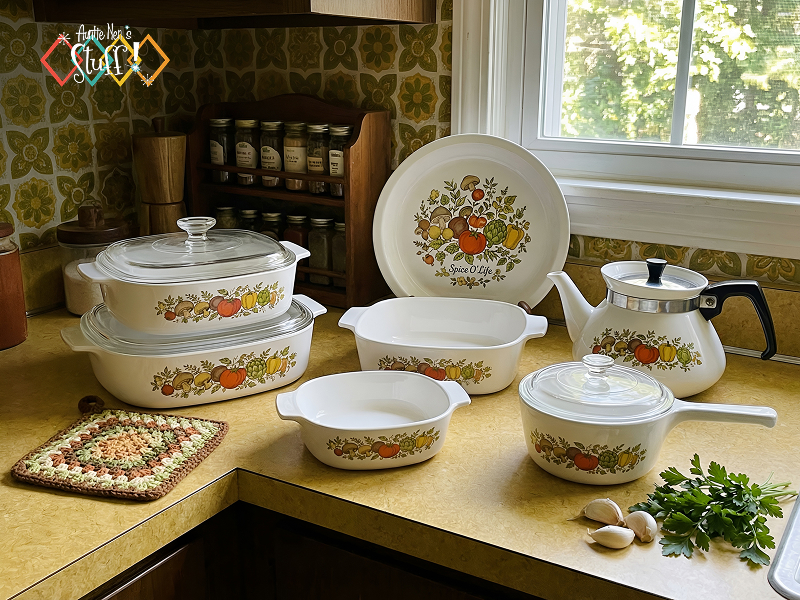
“Spice O’ Life” (1972–1975) is a standout. It has a warm, earthy design with vegetables and herbs. It came on everything—casseroles, pie plates, teapots. Complete sets in good condition sell fast.
“Blue Heather” (1970–1974) is another collector favorite. It’s a soft blue and white floral. It has a delicate look that people still love.
“Wildflower” (1976–1978) is the crown jewel for many collectors. It features a bold, colorful floral pattern. It was only made for about two years. That short run makes it rare. Some pieces sell for $200 or more.
“Country Festival” (1979–1982) had a farm-themed pattern. It’s charming and holds value, though not as much as Wildflower.
1980–1990: The Transition Years
In the 1980s, Corning shifted toward more modern looks. Patterns got bolder. Some were plain white or had simple geometric designs.
“Floral Bouquet” (1982–1988) was a soft pink and green floral. It’s common but still sells. “French White” (1980s) had no pattern at all—just a white finish with a textured surface. That one is still produced today under different names.
This era also saw the rise of “Visions” cookware. That was the amber-colored glass line. It wasn’t traditional Corning Ware, but it was made by Corning.
1990–2001: The Final Years
By the 1990s, Corning Ware patterns became simpler. “Country Cottage” (1990–1995) had a small blue floral pattern. It’s not as valuable as older patterns.
In 1998, Corning released a 40th anniversary “Cornflower” reissue. Those pieces look like the originals but have different markings. They’re not worth as much as the 1958–1988 originals.
Production ended in 2001. The brand was sold, and manufacturing moved overseas. American-made Corningware from 1958 to 2001 remains the gold standard for collectors.
What Makes a Pattern Valuable?
Not all vintage Corningware is worth money. Here’s what drives value.
Rarity. Patterns that were only made for a few years are more valuable. Wildflower is a perfect example. It had a short production run, so fewer pieces exist.
Condition. Chips, cracks, and scratches hurt value. So do utensil marks. The best pieces look like they were barely used. Lids are especially important. A dish without its original lid is worth much less.
Shape. Some shapes are rarer than others. Teapots, divided dishes, and certain casserole sizes command higher prices. The common 1.5-quart casserole in Cornflower is everywhere. The same pattern on a teapot is harder to find.
Set completeness. A full set—like a casserole with its lid and a matching pie plate—sells for more than individual pieces.
Original packaging. If you find a boxed piece with the original paper label, that adds value. Most people threw the boxes away.
At Auntie Nen’s Stuff, we’ve seen Cornflower casseroles sell for $10 and Wildflower teapots sell for $150. The difference is always in the details.
Rare Corningware Patterns to Watch For
These are the patterns that collectors actively hunt.
- Wildflower (1976–1978): The most valuable. A complete set can bring $300–$500.
- Spice O’ Life (1972–1975): Highly collectible. Teapots and rare shapes sell best.
- Blue Heather (1970–1974): Soft blue floral. Popular and steadily rising in value.
- Floral (1960s): Gold and brown. Harder to find than Cornflower.
- Tulip (1960s): Red tulip design. Rare.
- Rondelle (1970s): A geometric pattern. Less common.
Common Patterns (Lower Value)
These patterns are everywhere. They are suitable for everyday use but not for investment purposes.
- Cornflower (1958–1988): The most common. Still loved, but not rare.
- French White (1980s–present): Plain white. Useful but not collectible.
- Floral Bouquet (1982–1988): Pink and green. Common.
- Country Cottage (1990–1995): Blue floral. Late-era and common.
How to Spot Fakes and Reproductions
Corning Ware is rarely faked, but there are things to watch for.
First, check the bottom. Real Corning Ware from 1958–2001 says “Corning Ware” or “Corning” with a pattern name. If it says “Made in China” or lacks the Corning mark, it’s not vintage American-made.
Second, look at the material. Real Pyroceram has a smooth, glass-like feel. It’s not rough or porous. If it feels like ceramic or stoneware, it’s not original Corning Ware.
Third, check for the “Pyroceram” stamp. Many vintage pieces have this on the bottom. It’s a good sign.
Where to Find Vintage Corning Ware
You can still find Corning Ware at reasonable prices if you know where to look.
Estate sales are the best source. Older homes often have full sets that have been sitting in cabinets for decades. Prices are usually low.
Thrift stores and garage sales still have Corning Ware. But more people are hunting now. You have to go often and check carefully.
Online marketplaces like eBay and Etsy have the widest selection. But prices are higher. You’re paying for the convenience of finding exactly what you want.
Antique malls sometimes have Corning Ware. Prices vary. Some dealers know what they have. Others don’t.
I’ve found some of my best pieces at small-town thrift stores. Auntie Nen’s Stuff has pulled cornflower casseroles out of dollar bins and wildflower pie plates from dusty shelves. The hunt is part of the fun.
Caring for Your Corning Ware
Corning Ware is durable, but it’s not indestructible. Here’s how to keep it in excellent shape.
- Hand wash when possible. Dishwashers can dull the pattern over time. The high heat and harsh detergents aren’t beneficial for vintage pieces.
- Avoid metal utensils. They leave gray marks on the surface. Use wood, silicone, or plastic.
- Don’t use it on the stovetop. CorningWare is oven-safe but not meant for direct flame. It can crack.
- Store with care. Stacking pieces can cause scratches. Put a paper towel or cloth between them.
- Check for chips before buying. Most collectors consider a chip on the rim to be a dealbreaker.
What to Look for When Buying
If you’re starting a collection, focus on these things.
- No chips or cracks. That’s the most important rule.
- Lids included. A casserole without a lid is worth half as much.
- Clear pattern. Faded or worn patterns reduce value.
- Smooth surface. No deep scratches or utensil marks.
If you’re buying to use, condition matters less. A scratched casserole still cooks fine. But if you’re collecting for value, hold out for clean pieces.
Final Thoughts
Corning Ware patterns from 1958 to 2001 tell the story of American kitchens. They were primarily practical and secondarily decorative. That’s why they lasted. People used them every day.
Today, they’re a bridge between nostalgia and function. You can cook with them like your grandmother did. Or you can display them as a collection. Either way, they hold their value better than most vintage cookware.
The rare patterns are worth hunting. But even the common ones have a charm that newer cookware can’t match. There’s something about a cornflower casserole coming out of the oven that just feels right.
If you have old CorningWare in your cabinets, take a closer look. You might have a Wildflower piece hiding in the back. Or you might just have a solid set of cookware that’s still good for another fifty years.
Either way, it’s worth keeping.
For more vintage finds and collecting tips, check out Auntie Nen’s Stuff. We’re always hunting for the good stuff—and sharing what we learn along the way.