There’s a particular sound that echoes through my memories of family gatherings: the soft thump of a CorningWare casserole dish being placed on a hot pad in the middle of the table. Steam would rise, revealing the familiar blue cornflower pattern, a signal that dinner was served with love.
That dish wasn’t just cookware. It was a silent witness to Sunday roasts, holiday green bean casseroles, and Tuesday night leftovers. If you’ve dug one out of a parent’s cupboard or spotted one at a flea market, you’ve felt it too a warm pull of culinary nostalgia.
But what is it about this humble bakeware that tugs at our heartstrings so powerfully? And what stories—and perhaps even hidden value—are baked into those iconic white surfaces? Let’s dust off the past and unearth the enduring charm of vintage CorningWare together.
More Than a Dish: The Pyroceram Revolution
To understand the magic, we have to go back to 1953. In a post-war America hungry for innovation, Corning Glass Works scientists created a material they called PYROCERAM. It was a space-age marvel.
Imagine a material that could go directly from your freezer, into a scorching hot oven, and then straight to your table without shattering. This “thermal shock resistance” wasn’t just a convenient feature; it was revolutionary. It freed home cooks from the fragility of ceramic dishes and the clunkiness of cast iron. CorningWare, introduced in 1958, wasn’t just selling a casserole dish; it was selling freedom and confidence in the kitchen.
A Gallery on Your Stovetop: Identifying Iconic Patterns
The simple, sturdy shapes of the dishes were a perfect canvas for artwork. While the Blue Cornflower is the undisputed classic of the “little blue flowers” that launched a million meals, the world of vintage CorningWare patterns is rich and varied.
Knowing how to spot these is the first step in your treasure hunt.
- The Classic: Blue Cornflower. The most common pattern, often passed down through generations. Its value is often more sentimental than monetary, but complete sets in good condition are always desirable.
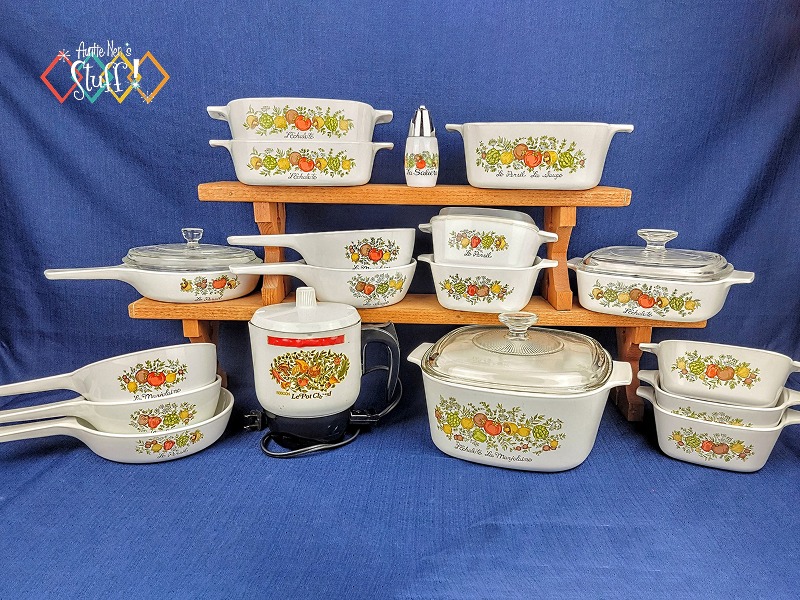
- The Country Favorite: Spice O’ Life. This pattern is a detailed, beautiful rendering of vegetables, herbs, and wheat. Its rustic charm has made it a highly sought-after collectible.
- The Elegant Minimalist: French White. For those who preferred a subtler look, this pattern features an embossed, all-white design that is both sophisticated and timeless.
- The 70s Icon: Butterfly Gold. With its cheerful, mod butterflies, this pattern screams 1970s optimism and has a dedicated fan base.
A Quick Tip from My Kitchen: I once found a stunning, nearly pristine Spice O’ Life pie plate at a garage sale, nestled between some old Tupperware. It’s a reminder that treasures are often hiding in plain sight, waiting for someone who knows what to look for.
The Collector’s Eye: What Makes a Piece Valuable?
So, you’ve found a piece. Is it a $5 flea market find or a $50 collectible? Its value hinges on a few key factors.
The Pattern Rarity Hierarchy
As a general rule, value follows this path:
- Common: Blue Cornflower, Casual
- Uncommon & Desirable: Spice O’ Life, Wildflower, Old Town Blue
- Rare & Valuable: Anjou Brown, Snowflake, some promotional patterns
The Piece Itself Matters
A standard 2-quart round casserole is lovely, but collectors get really excited about unique forms.
- High-Value Pieces: Grab-It bowls (the divided serving dish), percolators, skillets with their original glass lids, and large roasters.
- Lower-Value Pieces: Common casseroles, small saucepans, and pieces sold without their original lids.
The condition is King (or Queen!)
This is non-negotiable for serious collectors. When assessing your piece, check for:
- Staining: Are there permanent, cloudy stains on the white surface? This “crazing” can be a major detractor.
- Chipping: Run your finger gently along the rim, especially where the lid sits. Any nicks or chips significantly reduce value.
- Lid Compatibility: A piece is always worth more with its original, matching lid.
Your Handy Guide to Vintage CorningWare Markings
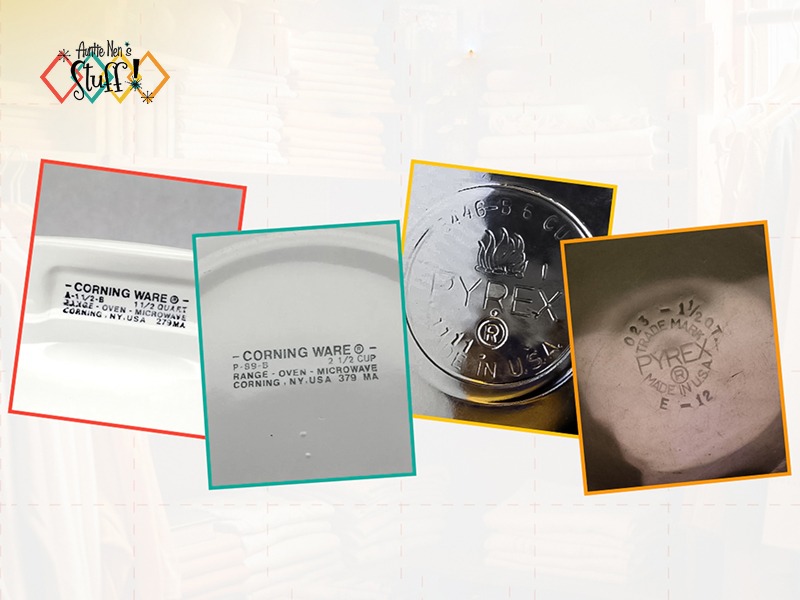
The bottom of your dish holds all the clues. Here’s how to play detective:
- Look for the Stamp: Authentic vintage pieces will be marked with “CORNING WARE®” and often “PYROCERAM.” The presence of “MADE IN USA” is another strong indicator of age.
- Decode the Numbers: You’ll see a number, sometimes with a letter (like P-135 or A-1-B). This refers to the pattern and size. The famous Blue Cornflower, for instance, is pattern P-135.
Later pieces may be marked “Corelle” or have no stamp at all; these are generally not considered vintage and hold less collector interest.
The Real Treasure: Why We Can’t Let Go
While it’s fun to talk about monetary value, the true worth of vintage CorningWare is intangible. It represents:
- Durability: In a disposable world, these dishes were built to last. They are a testament to quality and thoughtful design.
- Connection: They connect us to the cooks who came before us—to our mothers, grandmothers, and the shared history of family meals.
- Timeless Function: They are still, simply, fantastic to cook with. That revolutionary Pyroceram is just as effective today as it was 60 years ago.
It’s this powerful blend of history, utility, and heart that keeps us searching for these pieces, whether it’s at a curated online shop or a rummage sale full of Auntienen Stuff.
| Section / Topic |
What It Covers |
Why It Matters |
| Introduction |
Overview of Corningware’s nostalgia, heritage, and cultural connection. |
Sets the emotional tone, connecting readers to the value beyond mere utility. |
| History of Corningware |
Origins of Corningware, material science (Pyroceram), and its rise in kitchens. |
Helps readers understand how and why Corningware became iconic. |
| Why Collectors Love Corningware |
Discusses why collectors seek Corningware — durability, design, history. |
Explains the appeal that drives market demand and emotional value. |
| Identifying Authentic Pieces |
How to recognize real vintage Corningware — stamps, patterns, markings. |
Gives practical guidance for owners to verify authenticity. |
| Patterns That Command Value |
Highlights notable patterns that tend to be sought after by collectors. |
Informs readers on what patterns might attract higher interest or prices. |
| Condition & Preservation Tips |
How condition (chips, cracks, original lids) affects value and how to care for pieces. |
Offers valuable preservation advice to retain value over time. |
| Market Demand & Pricing Realities |
Discusses where Corningware is sold, typical price ranges, and how demand works. |
Helps readers set realistic expectations about value. |
| Where to Sell Corningware |
Options like online marketplaces, local antique shops, community groups. |
Practical next steps for those wishing to sell or appraise their items. |
| Culinary Nostalgia & Design Legacy |
The emotional connection Corningware evokes — more than cookware, it’s memory. |
Connects the product to human experience and cultural heritage — a strong engagement point. |
| Conclusion |
Wraps up the nostalgic and practical value of Corningware. |
Reinforces both emotional connection and actionable knowledge. |
Keep the Stories Cooking
Vintage CorningWare is more than a collectible; it’s a keeper of stories. Each scratch on a lid, each faint stain, speaks of a meal shared, a family nurtured, a home filled with warmth.
So the next time you see that familiar white and blue dish, don’t just see an old casserole. See a piece of culinary history, a symbol of resilience, and an invitation to create new memories around your own table.
Frequently Asked Questions
Q1) Is it safe to use my vintage CorningWare?
Absolutely! The Pyro Ceram material is inert and non-toxic. As long as the piece is not cracked or chipped (which could harbor bacteria), it is perfectly safe for oven, microwave, freezer, and table use.
Q2) How can I remove stubborn stains from my vintage dish?
Avoid abrasive scrubbers! Try a paste of baking soda and water, let it sit, and then gently scrub. For tougher stains, a soak with a denture tablet can work wonders.
Q3) I have a piece with a metal lid. Is it less valuable?
Often, yes. The clear glass “Vision” lids are generally more sought-after by collectors than the early metal “Sk” series lids. However, any piece with its original lid is more valuable than one without.
Q4) Where is the best place to find vintage CorningWare?
Thrift stores, estate sales, flea markets, and online platforms like eBay and Etsy are all hunting grounds. The thrill is in the hunt!